Your Custom Text Here
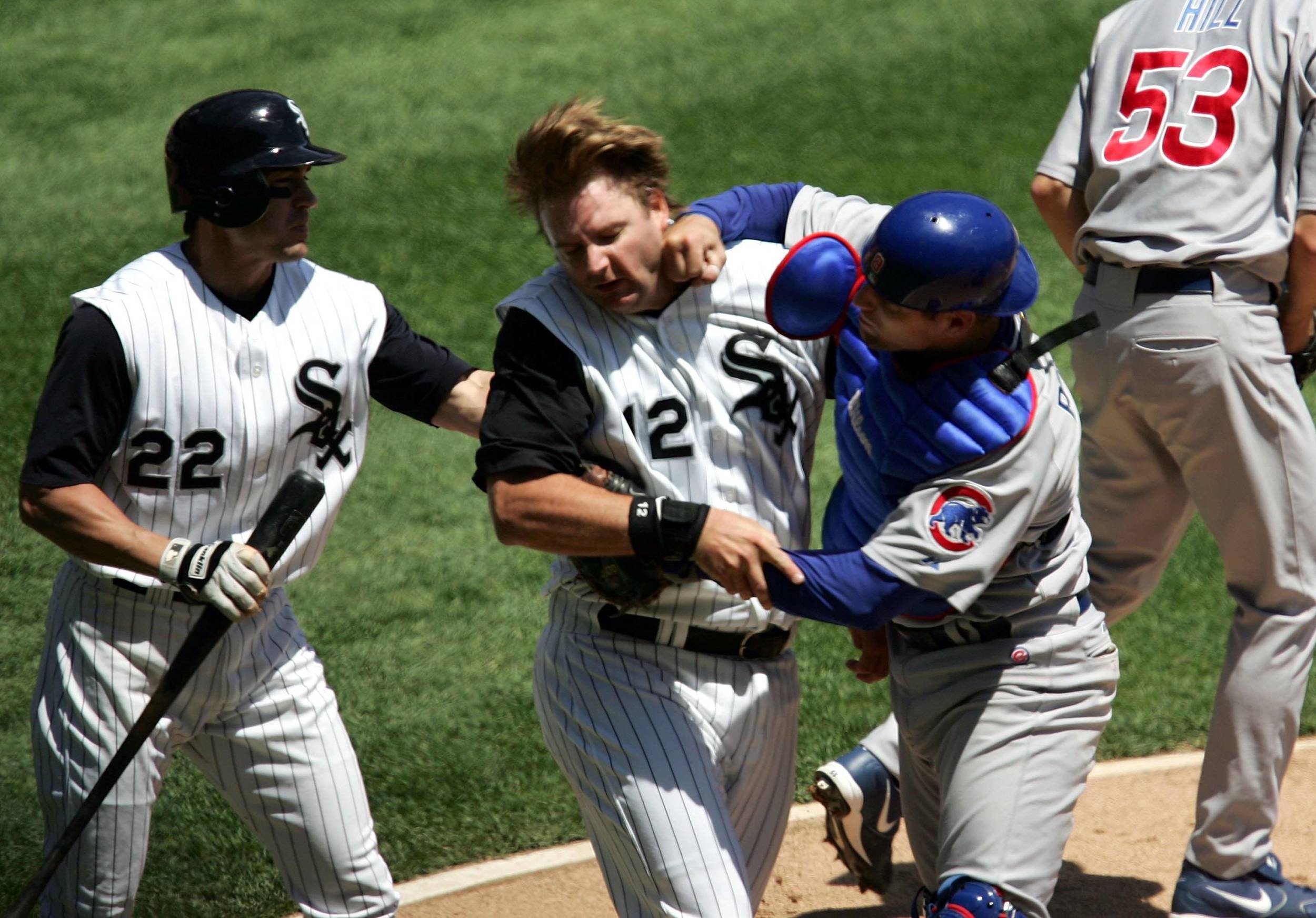
John Baker Shares First-Hand Insights on Protecting Teammates and Retaliation
Retaliation – a.k.a. throwing at an opposing hitter in response to an insulting or dangerous action – is a fairly common occurrence in MLB. While there are certainly different opinions on the matter, I’d argue that the majority of fans – and players – find it, more or less, necessary.
I, on the other hand, have generally found myself – often alone – on the other side of this issue. Watching Giancarlo Stanton, one of the most exciting young stars in the game, get hit in the face was strong enough cause for me to become discouraged and disappointed by one of baseball’s oldest, most dangerous, and most widely-accepted unwritten rules. Intentional or not, the result of that particular incident could happen any time a batter steps into the box with a target on his back.
However, I don’t play baseball. I write about it. And while that does afford me a strong understanding of the game, I’d be remiss if I said I understood everything about this complex sport. So, when former Chicago Cubs catcher John Baker put out a call on Twitter, I took the opportunity to learn about something I seldom understand ….
@manbearwolf About retaliation in baseball. I'm not a fan, too dangerous, are you?
— Michael Cerami (@Cerambam1060) July 1, 2015
After a brief back and forth on Twitter, Baker and I exchanged emails and got together on a little project. Below, you’ll find his thoughts on retaliation, and the particular role catchers play in this rarely-addressed topic.
What is your general opinion on retaliation?
“My general opinion on retaliation is that it is situational. Most baseball violence is predicated on a prior action that has either the potential to injure or the power to offend. Basically, we retaliate for two reasons. One, you hit, almost hurt, or hurt our player. Two, you celebrate a common action excessively with the intention to show up our team. It is important to understand the difference in these situations; to me the first reason has more merit, as I said in my article for FOX, I don’t really care about people’s feelings getting hurt over home runs or strike outs. Pitchers should not be mad at the hitter for watching the home run, they should be mad at themselves for leaving the ball up.”
What is the general attitude towards retaliation among other players/coaches around the league?
“There is no general attitude. Most people seem to find retaliation necessary but their reasons vary.”
As a catcher, do you feel a particular responsibility or role in retaliation?
“As a catcher I felt responsibility to do a few things. First, if we were going to hit someone on purpose, the catcher is responsible for making sure the batter doesn’t make it to the pitcher on the mound. Secondly, I made sure to be vocal during altercations because, as one of the more expendable players (for the Padres & Cubs as the back-up catcher), it didn’t matter if I got beat up or thrown out of the game. My behavior led to the ejections of both Matt Kemp and Jerry Hairston when Carlos Quentin charged Zack Greinke and I was a Padre. Finally, if I saw someone watching a homer while I was catching, I’d scream ‘RUUUUUUUUUUUUUUUUUUUN’ in hopes that they would, and we would avoid one of those ugly confrontations.”
Does retaliating against a particular player – a team’s unofficial captain/leader/best player – strike you as an appropriate way to handle retaliation?
“This is where theories really differ. Some advocate hitting the same position on the field, some want to hit the same spot in the order, and some like to wait until two outs to do it. I believe that if retaliation is the intention, then the first batter of the next half inning should wear it, or, if possible in the NL, the pitcher that hit the batter on purpose if the pitcher is forced to hit. The longer a team waits to retaliate, the worse it usually turns out. Long-standing grudges are stupid. This isn’t the 80s where George Brett and Greg Nettles can fist fight at third base without ejections. The only time a team should attempt to hit a star is if their star has been repeatedly hit. We had a bit of this last year while playing the Pirates; they seem to enjoy hitting people (especially Anthony Rizzo) and pitching up and in. I think it is a Clint Hurdle thing, last year the Pirates led the league hitting 88 batters (link here). This year they continue to do more of the same (link here). Since you can’t hit Hurdle or the pitching coach, as they continue to almost injure star players, they are effectively putting a target on Andrew McCutchen’s back. We saw this last year with McCutchen/Goldschmidt and the Diamondbacks.”
Not every issue is black and white; do you feel there is a right or wrong way/time to retaliate?
“The right way to retaliate is immediately. Counter intuitive to how we are raised as human beings. Immediate emotional responses don’t generally work in the real world, but I feel they are required on the diamond. Teams must promptly let other teams know a certain action or behavior is pissing them off. If they don’t, when they do retaliate the action can sometimes seem confusing and lead to unnecessary altercations and feuds down the road. An eye for an eye is better than seven eyes for seven eyes over three series. Get it over with early and make it clear you won’t stand for the behavior and the other team is forced to make an adjustment or retaliate themselves. Justice should be swift and uncompromising.”
Do you have any particular memories or anecdotes on the subject?
“Last year we were playing the Pirates during the middle of the summer in Pittsburgh in a game that Jeff Samardzija was pitching. The Pirates had hit or nearly hit Rizzo quite a few times in our first few series and, of course, Jeff had had enough. One of his greatest assets as a teammate is his willingness to both defend and fight for you. Since the trade deadline was approaching, and all signs pointed to a trade, he wanted to hit McCutchen to pay them back for the stuff with Rizzo before he was no longer Cub. McCutchen was hot at the time, and when that man is hot, he is HOT. We threw at him three times in one at bat, but the Shark was trying to throw the ball so hard he couldn’t hit McCutchen as the Pirates star displayed Mayweather like evasiveness. On the fourth or fifth pitch, Samardzija almost hit McCutchen in the belt with a 97 MPH fastball. In a deft combination of hand speed, self-defense and amazing quickness, McCutchen turned on the fastball, pulled his hands in, and lined the pitch off the top of the left field fence at PNC. This anecdote supports my theory that the only time to retaliate is immediately, and the idea that we can ‘get them back later’ almost NEVER works.”
* * *
That is certainly a lot to unpack, but it is without a doubt one of the more educational, honest and realistic explanations of retaliation I’ve read. Baker’s recent exit from baseball and former position on the field put him in an especially interesting position to comment on the matter. I could feel my position on retaliation begin to become more nuanced as I read through his responses.
For example, I’m encouraged that potentially violent actions on the field are an apparently more meritorious cause for retaliation than a response to showboating. But, I am reminded that two wrongs don’t make a right. It’s a tough sentiment to understand, and one that I doubt will be adopted quickly, but perhaps leading by example is the best way to limit the amount of intentional violence on the field.
Just recently, Marlins’ pitcher Jose Fernandez (clearly) unintentionally hit Diamondbacks outfielder David Peralta. Despite clear, immediate remorse and concern, Diamondbacks pitcher Dominic Leone responded with two outs in the next inning, by (clearly) intentionally hitting young Marlins outfielder Christian Yelich.
Yelich is yet another bright young star in baseball, and I cringe when thinking about how swiftly and conclusively his career could have been ended if Leone had missed his spot by just a couple feet. At the end of the day, we – as fans – want to see the best and brightest athletes on the field. Injuries happen, of course, but if they can be avoided or limited in any way, it’s usually worth pursuing.
After considering Baker’s responses, though, my opinion on the matter has evolved.
I still don’t condone the actions Leone took (especially in this particular situation), but I can begin to understand the vast amount of pressure he was likely under to do so. In the mind of the many baseball folk, it was Leone’s job, perhaps even responsibility, to stand up for his teammate and ensure that everything was fair. If he didn’t retaliate, he could be letting his teammates – and let’s face it, his friends – down.
What baseball may need, then, is strong, decisive leadership on the field and in the dugout that stands up against violent behavior on the field (and the off-the-field pressure to engage). If the ultimate goal is keep everyone safe, that very well may be the only way – even if it is the hardest.
That day may very well be far away, and, in the interim, this sort of thing is going to continue happening. For what it’s worth, I do take solace in players like John Baker, who have, at a minimum, expressed an interest in handling things safely and with good reason. He represents a class of player that clearly understands and respects the game, as well as its many unwritten rules – but concedes that there are appropriate ways to navigate them.
Baker is a great follow on Twitter @manbearwolf, and he’s got his own site here.
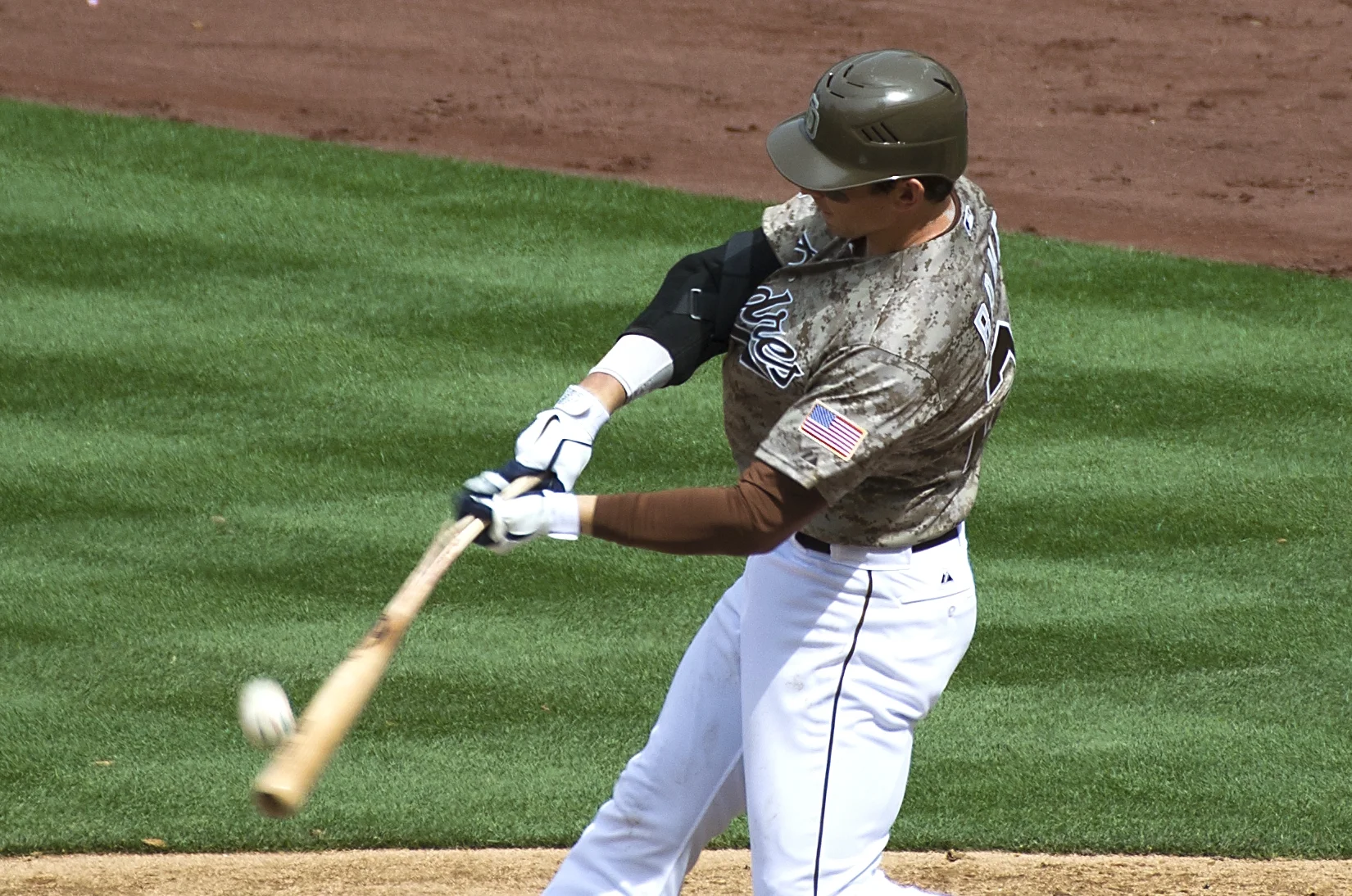
Practice, Train, Compete
I learned a ton about playing catch from Pudge Rodriguez. He riffed on how important it was to throw the ball to your partner with authority. He said, “When I play catch, I’m trying to knock the other guy down. That trains my arm to know what to do when I try to throw a baserunner out instead of training it to toss the ball.” John Baker learned his lessons from Huston Street. His takeaway is meaningful. He shares, we learn. Enjoy.
“I learned a ton about playing catch from Pudge Rodriguez. He riffed on how important it was to throw the ball to your partner with authority. He said, “When I play catch, I’m trying to knock the other guy down. That trains my arm to know what to do when I try to throw a baserunner out instead of training it to toss the ball.” John Baker learned his lessons from Huston Street. His takeaway is meaningful. He shares, we learn. Enjoy. ”
Hey, you just got drafted…good luck.
This year, in the 2015 Major League Baseball Draft, 1,215 players were drafted. Though some will not sign a professional contract, most will. The influx of young talent creates a surplus of players and forces organizations to make difficult decisions. Room must be made for the youngest professional generation; it seems that for every new contract signed an older one is terminated.
I found myself jobless for the first time since 2002, with ample time to reflect on baseball. I have thought a lot about what I would have liked to hear as I was entering professional baseball, what lessons I should have known about how to identify my mindset and better prepare for competition. To this rookie class, I wish you all the best. Be committed in your pursuit of the Major Leagues and savor this time in your life, it doesn’t last very long. For everyone else, this post isn’t really about baseball. It’s about life.
PRACTICE, TRAIN, COMPETE
or
What I learned from playing catch with Huston Street
My experience in professional baseball taught me the importance of an athlete’s mindset. Your mindset (an established set of attitudes), has a direct effect in three very specific areas; Training, Practicing and Competing. Knowing the differences in these three areas means we can learn to apply the proper mindset to each one and give ourselves the best chance to perform. As a catcher, I worked with a lot of pitchers, but, unbeknownst to him, the one I learned the most from is Huston Street.
On a summer day in San Diego in 2012, Jason Marquis and I were discussing baseball. More specifically, we were discussing how a pitcher cultivates command. Command is the ability of the pitcher to throw the ball where he wants to, not just in the strike zone, but outside of it as well. He had asked me who I had caught that had the best command. My answer was our closer, Huston Street. Huston was in the midst of one of his best statistical seasons, and something interesting was happening to him as a pitcher. He wasn’t throwing particularly hard. He’d top out at 89 MPH, sitting closer to 86 MPH with his fastball but was putting up some of the best numbers of his career. The secret to his success was very simple; Huston had developed the ability to throw the ball exactly where he wanted, nearly every single time. Marquis suggested that I pay close attention to Huston’s practice habits and, whenever possible, play catch with him before the game so I could determine the method. It didn’t take long to see a pattern.
TRAINING
As long as we were outside of sixty feet, six inches in our games of catch, Huston was training his arm for strength. He didn’t care where the ball went; he joked with the other pitchers while he threw. The length of this session was based on how he physically felt. He put less mental effort and focus into this part of his preparation, because, by design, this part is more physical. Accuracy is not the point of the long toss program; the purpose is to physically condition the throwing arm.
Training is foundational work. You train so that you can show your skills under duress or when you’re tired. In baseball, this is about exercising in order to improve strength, flexibility, or stamina. Think about strength training, plyometrics, and all out sprints – we use these tools to improve our athletic ability by training our body to move faster. Results aren’t important; building up a strong base is.
PRACTICE
Where Huston was loosely relaxed in training, he was finely focused in practice. Once within the mound distance, from the first throw, Huston was going through his full delivery. His arm speed matched his body speed, allowing his hand to release the ball from exactly the same point. EVERY TIME. As his arm sped up, so did the speed of his delivery. The synergy in body and arm speed allowed for a repeatable motion that produced a predictable result. The ball went exactly where he intended it to go, because his hand let it go from the same place every time.
Huston walked into even a simple game of catch with a purpose. As long as we were within sixty feet, six inches, he practiced his delivery, he practiced his release point…he practiced being a pitcher. This wasn’t doing work for the sake of doing work. He understood the very definition of practice – “repeated exercise in or performance of an activity or skill so as to acquire or maintain proficiency in it.”
If something in his delivery was off and contributing to a different release point or hand position, he used these daily catch sessions to refocus and realign. His mindset was simple. Identify any problems and adjust.
COMPETITION
When Huston threw his bullpens, they were very, very intense. He wanted my glove target just off the plate, about ten inches above the ground. He focused on competing with himself. How many times in a row could he execute a fastball down and away to a right handed hitter before he made a mistake? How many sliders could he throw just off the plate and just below the strike zone? He would berate himself after mistakes, and I saw him throw his glove in frustration on more than one occasion – IN SPRING TRAINING – IN THE BULLPEN.
Huston said that his dad, James, taught him this mindset. On a mound in a backyard in Texas, James Street taught young Huston that every pitch you throw off of a mound should be viewed through the game seven, bases loaded, 3-2 count lens. It didn’t matter if it was the backyard bullpens, in high school or game seven of the World Series. Everything is on the line, believe in your preparation, and execute your pitch. The brilliance in this teaching is that the young pitcher learned to think only one way whenever he toed a rubber. Every time Huston pitches off of a mound, it is the same.
In order to react and execute under pressure, you have to simplify your thoughts. Almost by definition, baseball players are competitive. They don’t require further motivation to try and win. No one ever needed to coach me to “want it.” But something happens when the lights come on in pro ball, new environments are introduced, new nervousnesses are dealt with, new butterflies must be calmed. Everywhere a player goes, the base paths and mound are the same distance, home plate is the same size, but everything else around them changes. I had a routine for getting into the batter’s box that brought me comfort no matter where I was playing, from High School to Yankee Stadium. Drawing three lines with my feet and digging in reminded me that I was just playing baseball, and I was prepared to compete.
Sameness, simplicity, and repetition are the building blocks of consistency. Consistency is the foundation of a long professional career.
Not everyone will have their chance on the mound under the lights. Nevertheless, we’ll all face situations where we’re called upon to perform at the highest level. Developing a routine of training, practicing and competing lets you shine. Build your foundation, practice the technical skill and have success in competition. Plenty of people will offer suggestions, but how and what you choose to practice is your responsibility. Approach practice mindfully so you can compete mindlessly. Strengthen your body so that you can repeat the skills you have spent time developing! Don’t forget to learn from your teammates; they are going through the same struggles and successes as you.
Whenever I was catching someone’s debut after they got called up, or talking to a hitter newly welcomed to the big leagues, I always told them the same thing.
When you feel nervous, when your heart is beating, and you notice the crowd, when you see three or five decks at a stadium for the first time, when you’re about to compete against your idol, when your stomach is in your throat…step off the mound or out of the box, take it all in and embrace it. Celebrate the stress, your body is telling you that you are exactly where you are supposed to be.
And if that at bat is against Huston Street, good luck.
John Baker played in the majors for seven seasons, from 2008-'14. He is a contributor to JABO. Follow him on Twitter.
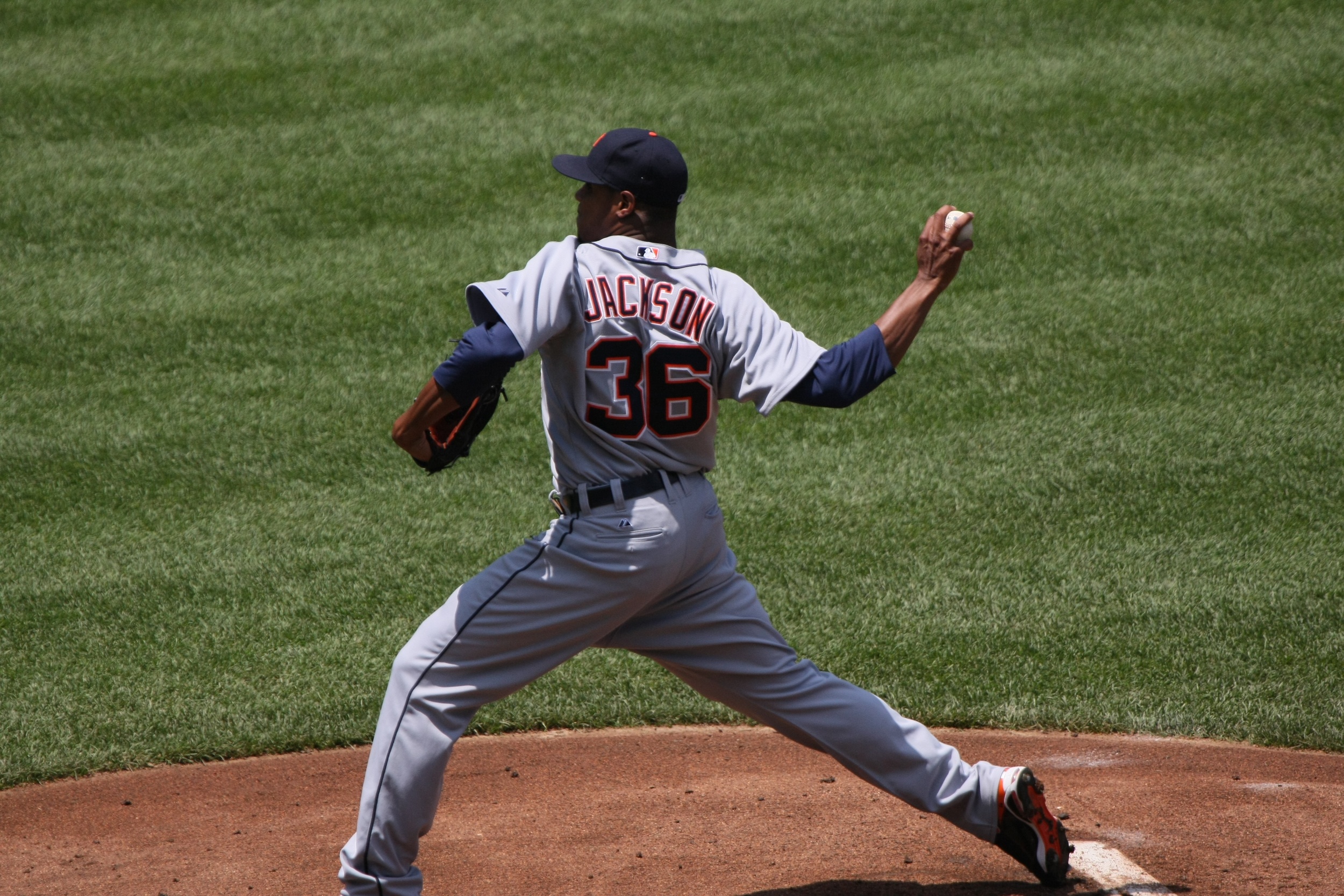
EDWIN JACKSON: CONSUMMATE PROFESSIONAL, TEAMMATE, FRIEND
Edwin Jackson has had a pretty incredible career. He made his major-league debut on his 20th birthday in 2003, and beat Randy Johnson and the Arizona Diamondbacks. In 2010, he threw the second no-hitter in D-backs history, despite walking eight batters and throwing 149 pitches. The last African-American pitcher to throw a no-hitter in the National League was Bob Gibson in 1971 against the Pirates. The man has worn a lot of uniforms. He has been a Dodger, a Ray, a Tiger, a Diamondback, a White Sock, a Cardinal, a National and a Cub. He will likely wear another uniform soon. Two more teams, and Edwin Jackson will have pitched for one-third of MLB’s franchises.
“Edwin Jackson has had a pretty incredible career. He made his major-league debut on his 20th birthday in 2003, and beat Randy Johnson and the Arizona Diamondbacks. In 2010, he threw the second no-hitter in D-backs history, despite walking eight batters and throwing 149 pitches. The last African-American pitcher to throw a no-hitter in the National League was Bob Gibson in 1971 against the Pirates. The man has worn a lot of uniforms. He has been a Dodger, a Ray, a Tiger, a Diamondback, a White Sock, a Cardinal, a National and a Cub. He will likely wear another uniform soon. Two more teams, and Edwin Jackson will have pitched for one-third of MLB’s franchises.”
Organizations are built based on different philosophies. Some teams are willing to spend big in order to entice a star free agent, knowing full well a big return on their massive investment is unlikely. Others are relying more and more on statistical projection and sabermetrics in order to acquire the best available player for the lowest available price. Many teams prioritize minor-league development while others use their farm systems to cultivate trade bait. Some teams attempt to extend players with cheap pre-arbitration deals, while others wait the full six years before discussing long-term reward. Jackson has been through all of those situations. Edwin has been both a super-prospect and a failed prospect. He has been a part of deadline deal. He has been an All-Star, and he’s won a world championship. He grew up in the big leagues. He’s been teammates with Robin Ventura and Bryce Harper, Fred McGriff and Anthony Rizzo, Ron Coomer and Kris Bryant.
In an inevitable move, the Cubs recently parted ways with Edwin, in order to make room for Rafael Soriano. In the wake of the move,teammate Jake Arrieta called Jackson “one of the best human beings" he's ever been around. And Arrieta was hardly alone in his affections ...
Professional baseball players understand more than anyone else the negative side of the business of baseball. The quantifiable always trumps the qualifiable. We know that, but players are people, too. Families get intertwined; off-field bonds are forged as memories are made together. Reading the reactions of my former teammates solidified my belief that although the statistical analyses say otherwise, the Edwin Jackson signing was not a bust. Here’s why ...
First, his contract really isn’t that big. Big for the normal American (of course!), but not big for baseball. Just scroll through this list for some perspective. Second, it should be noted that Edwin’s time in Chicago coincided with an organizational overhaul. Before this season, the Cubs for whom Edwin played were never expected to win. It isn’t like his performance, poor or otherwise, really mattered. Hard to hear, and hard to write as a member of one of those teams, but true. When the Cubs hired manager Joe Maddon last winter, it became evident that the organization was speeding up its developmental timeline. This year the statistics matter a lot more than in 2014. Quantifiable always trumps qualifiable, especially when a championship might be on the line. What Edwin brought to the team as a pitcher became replaceable. Fortunately, the stamp he left on his teammates will last much longer.
The diversity of Edwin’s baseball experience is remarkable. Because he has been with so many teams, he has been through every scenario that a player can experience: highs and lows, rebuilding, contending and everything in between. He could relate to everyone. He does relate to everyone.
As a member of the Cubs, Edwin set a positive example for younger players and budding superstars like Arrieta and Rizzo. In the midst of struggles over the course of two years, he rarely complained or made excuses, but instead tinkered and attempted to improve. He watched video, he worked out and he threw bullpens. When we hit BP, he shagged; when we played, he watched from the dugout. He never spent longer than a half-inning in the locker room. This might not sound like much to the casual fan, but it meant a lot to us. When I think about Edwin I think about positivity in the face of failure. I am struck by his ability to stay resilient. Teams need these emotional barometers, people who set the right example effortlessly, simply by being themselves. It’s easy to act like Edwin when everything is going your way, and it’s crushingly difficult to do so when times are tough. At the ballpark, on the plane, in the bus or at the hotel, Edwin was the consummate professional, teammate and friend. Away from the game, as a person and family man, he is even better.
The professional example displayed to younger players through his consistent behavior will be passed down through Rizzo and Arrieta, Bryant and Kyle Schwarber. Leadership manifests itself in different ways. Edwin’s brand didn’t involve yelling or posturing. It came through kindness and generosity. It came without effort. A foundation for long-term organizational success is being built by Theo Epstein in Chicago, and most of the pieces are sourced internally. Fortunately for the Cubs, these kids will be affected by the extended reach of Edwin Jackson’s professionalism which, to this former teammate, is priceless.
John Baker played in the majors for seven seasons, from 2008-'14. He is a contributor to JABO. Follow him on Twitter.
Posey injury should lead to rule changes about sliding
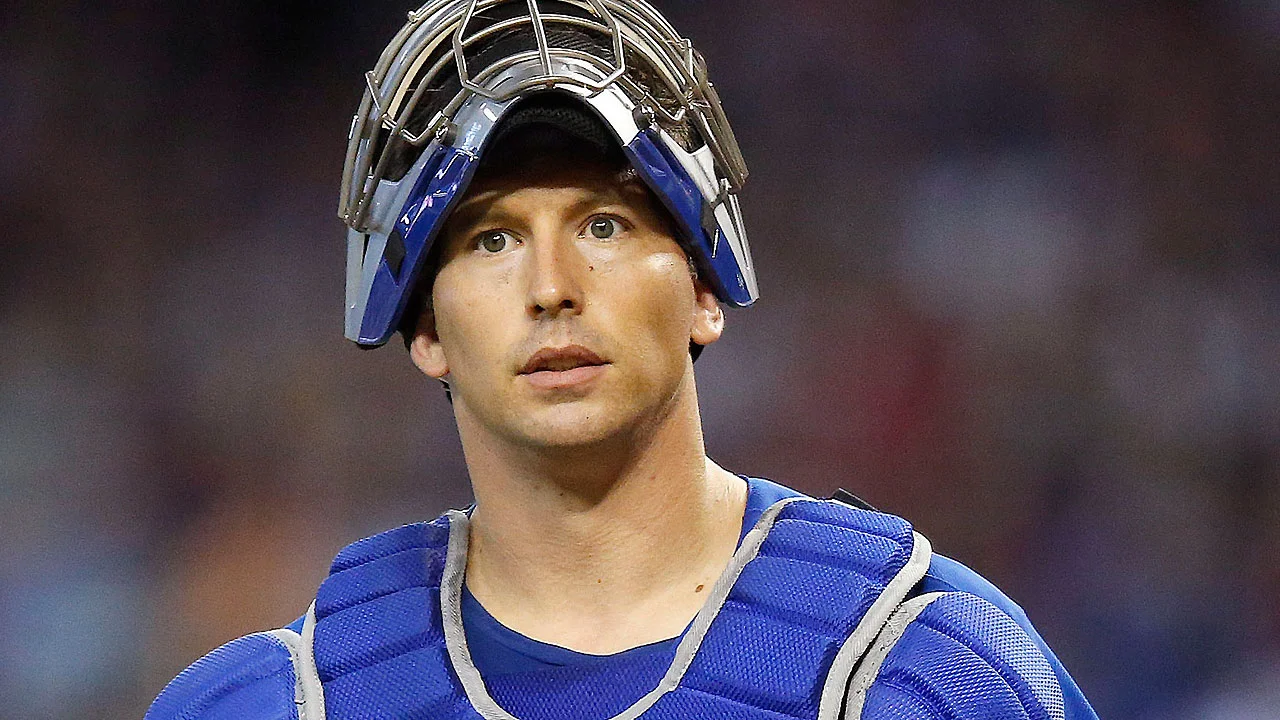
Florida Marlins catcher John Baker(notes) is writing an open-ended series of posts abouthis comeback from Tommy John surgery. Because he's someone who offers an informed opinion, we asked him to write about the recent Scott Cousins(notes)-Buster Posey play at the plate.
“What Scott Cousins did was in no way dirty, malicious, or outside of his rights as a baserunner.”
Since I haven't been with the team, it is difficult for me to watch Marlins games. It is even more difficult to watch them play the San Francisco Giants so near to my hometown. It is even MORE difficult to watch them play the Giants while Cody Ross(notes) wears No. 13 on his back. Fortunately for me, our cable stations love gore and injury.
This situation with Buster Posey has been a hot topic. What Scott Cousins did was in no way dirty, malicious, or outside of his rights as a baserunner. Second, what Buster Posey(notes) did on defense was exactly right. Both men put their respective teams before themselves and sacrificed their bodies in their attempts to win the game.
Without a doubt, the context of the game must be taken into account; this was the go-ahead run, and Cousins made sure it scored. While the injury is devastating, it is also the collateral damage of being a team player. I respect men who play the game hard and in this case, both did.
I know that Buster Posey is a rising star, but let's rewind to last season when Nyjer Morgan(notes) went out of his way to hit Brett Hayes(notes) (effectively ending his season and sparking an ugly brawl the next day) in what was clearly a dirty play. How come no one was on PTI arguing for a rule change then?
And if it wasn't Cousins who hit Posey, but instead someone like Tulowitzki, or Pujols, what then? Would the term "dirty play" be used? Apparently, to get some attention in baseball you have to be a star with a World Series ring. Don't worry Hayeser, I've got your back (so does Gaby).
I would also like to point out that had Buster caught the ball, tagged out Cousins, and not had his metal spikes stick in the ground, that play would have been in the top 10 on "SportsCenter" as more evidence of Posey's greatness. No one would have cried foul or demanded the rules be changed.
Within the current rules these plays will continue to happen. But at what cost?
John Baker played in the majors for seven seasons, from 2008-'14. He is a contributor to JABO. Follow him on Twitter.

OPEN DOORS AWAIT FIRST PUBLICLY GAY PLAYER
Last Friday, the Supreme Court ruled that our Constitution guarantees a right to same-sex marriage. The ruling, a landmark victory for the gay-rights movement, highlights a shift in the popular perspective as more and more Americans now openly approve of these same-sex unions. In the sporting world, the perspective is shifting as well. Basketball has Jason Collins, football Michael Sam, and so it seems only a matter of time until we meet the first openly gay Major League Baseball player.
Last Friday, the Supreme Court ruled that our Constitution guarantees a right to same-sex marriage. The ruling, a landmark victory for the gay-rights movement, highlights a shift in the popular perspective as more and more Americans now openly approve of these same-sex unions. In the sporting world, the perspective is shifting as well. Basketball has Jason Collins, football Michael Sam, and so it seems only a matter of time until we meet the first openly gay Major League Baseball player.
Fortunately for that player, his safest haven will likely be the locker room.
The locker room is a great homogenizer. Players come from all over the globe, united by their ability to throw, catch or hit a ball. Multiple languages are spoken and learned, international friendships are cultivated and perspectives are shifted. For the better part of eight months, we spend most of our waking hours in close quarters.
We make fun of each other. A LOT. We also make fun of things we can’t control: baldness, height, nose size, et cetera ... nothing is off limits because nothing is taken seriously. We say awful things to each other that if said by anyone else would likely result in a fight. You can’t call him that; only we can. Faulty logic? Probably. We don’t care.
Baseball players have thick skin. We have to, since we get cursed at on the road, booed for poor performance at home, and routinely embarrassed on national television. When we step up to the plate or take the mound, the record of our performance is displayed in large bright numbers under an enormous photograph of our face. Sometimes I thought my picture was about to scream, “Look at me! I SUCK!!”
So we grow an outer layer of Teflon that facilitates our ability to “shake it off.” Quick, imagine your statistics from work displayed in front of 50,000 people who played a Little League version of your job as a kid, and they can scream ANYTHING. Frightening, right?
Add the inherent stress involved in routinely participating in a public spectacle to the deep bonds forged from the fire inside the locker room, and it’s easy to predict how a baseball team would treat a gay teammate: It wouldn’t be perfect, but he would be welcomed.
Yes, some players would initially be shocked, maybe even outraged, upon finding out their teammate is gay. Some would laugh, then follow with a reflexive sigh and say, “I knew it!”
I would ask him, “Why didn’t you tell me sooner? How do you hold something like that inside for so long? Tell us; we’re your teammates!" Everyone would have his own opinion, as is everyone’s right. People would act awkward in the bathroom and in the shower for a while, but things would soon return to normal.
And eventually the locker room would find humor in the situation. Sexual orientation would finally take its place alongside the other things we have no control over, like nose size or height. The kind of things a team jokes about with each other. You can’t call him that. Only we can.
Full acceptance, though? Ah, yes. That would finally be achieved during a road game, when some dummy in the stands has one too many beers and screams out a homophobic slur. The collective defense mechanism built on the field and in the locker room would engage. Someone other than the player would respond to that idiot: Smart enough to buy a ticket, but too dumb to keep your mouth shut. You can’t call him that. Only we can.
No major leaguer has ever come out during his playing career. My guess is that after weighing their options, the gay players just haven’t found the circumstances ideal, or welcoming enough. Perhaps they simply don't want the onus of publicly representing the LBGTQ movement. I don't know. As a straight man, I simply cannot estimate the difficulty involved in making that decision.
Baseball has evolved: color barriers broken, rules changed, mounds lowered and replay instituted. The goal of any organization is to win the World Series. Gay or straight, the best players will always be in high demand. The door to the locker room is open to those talented enough for an invitation.
John Baker played in the majors for seven seasons, from 2008-'14. He is a contributor to JABO. Follow him on Twitter.
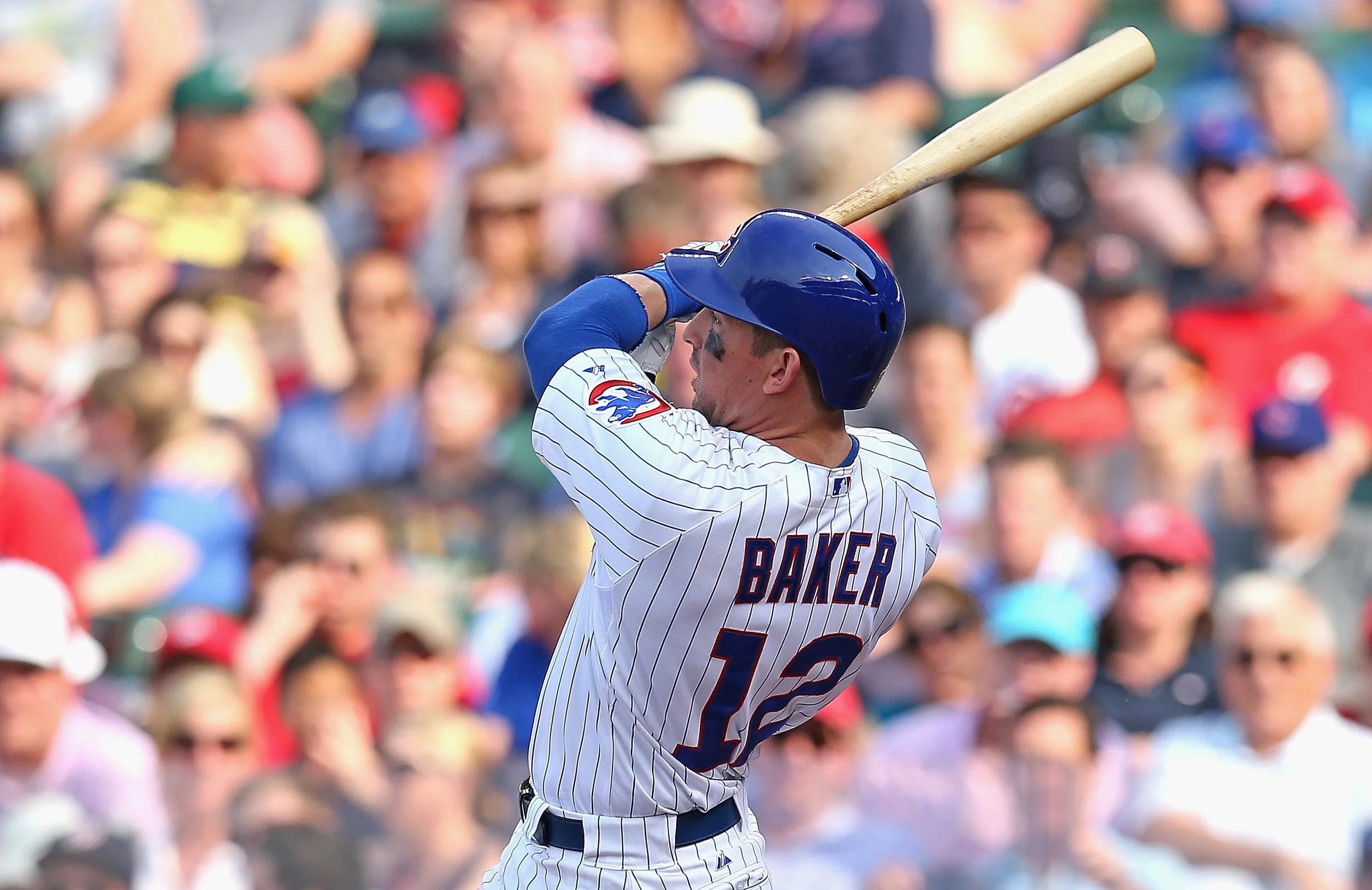
PLAYING THE RIGHT WAY?
The most overused, overwrought cliché in baseball? Play the game the right way. What does that even mean, though? The answer to that question must take into account three important factors: When, Who, and Where.
“I learned about baseball from my dad. A former professional player himself, with a degree in Psychology from Stanford”
The most overused, overwrought cliché in baseball? Play the game the right way. What does that even mean, though? The answer to that question must take into account three important factors: When, Who, and Where.
When. We learn this game as children, when our reasoning skills are developing and our emotional awareness is in its infancy. The reason grown men cry and cheer and cuss and throw beers at baseball games is because baseball turns us into our 8-year-old selves for three hours (or five hours, if it’s a Red Sox-Yankees game).
Who. Everyone who’s played or watched baseball has learned about the game from someone. We could have been taught by Dad, an uncle, a grandmother, maybe a beloved Little League coach. Someone taught us how to play before MLB Network and "Baseball Tonight" began bombarding us with new catch phrases for homers and endless highlights of bat flips, punch-outs, and diving plays.
I learned about baseball from my dad. A former professional player himself, with a degree in Psychology from Stanford, my father hammered one nail of an idea into my brain over and over again: “Son, it takes NO talent to hustle.” And so I hustled. I never flipped bats, celebrated excessively, or anything else. I never even thought about doing those things. Whatever one’s personal opinions about these ever-changing “unwritten” rules, they were implanted by someone during childhood.
Where? I’m from suburban Northern California. I grew up an avid fan of the entire Oakland Athletics, and one San Francisco Giant: Will Clark, because of his beautiful swing. The only baseball-related altercations we had involved over zealous slides into second base or balls being thrown too close to someone’s head. I never thought about bat flips as sources of debate until I caused benches to clear with one of my own against the University of Arizona in 2002. I had never heard of Dallas Braden’s “Respect My Mound” idea, and we grew up forty miles apart. Original location might be the most important piece in a baseball player’s fundamental development.
The longer I played baseball, the more I realized that across America, that cliché – Play the game the right way – actually means something very specific: Play the game MY way.
After the 2011 baseball season, I accepted a contract to play baseball for the Toros Del Este of La Romana in the Dominican Republic. I’d just completed my tenth pro season, but had missed most of the season while recovering from Tommy John surgery.
When I arrived in the Dominican, one of the first people I met was a young, power-hitting American first baseman in the Padres system. He had been called up for a month or two the year before, but really struggled, and was down in the Dominican for more at-bats. After the usual pleasantries, we boarded a bus to San Francisco de Macoris to take on the Gigantes. On the way, we had a conversation I’ll never forget. (I am paraphrasing here, because I can’t remember the exact wording. So much for never forgetting.)
Him: “Bro, wait till you see a game here. It’s incredible.”
Me: “Whaddaya mean? Like, the atmosphere or something? I’ve seen a lot of games.”
Him: “No, everyone pimps everything down here. Everything: groundball base hit in the four hole: huge bat toss, and wait until you see the antics after homers. It’s unbelievable, I love it. I can’t wait to hit a homer and pimp the hell out of it. The best part is that no one cares. It’s just part of the game down here. The pitchers will do ridiculous fist pumps after strikeouts, and infielders will pimp ground balls. It’s crazy!”
Me: “Seriously, all of that is just part of the game?”
Him: “Yep. Part of the game.”
At a truck stop in the middle of our long drive, a vendor was selling handmade jewelry, including brightly painted rosaries. My new friend bought one of the rosaries and then outlined his plan.
“I’m going to hit a bomb today, pop this rosary out of my jersey, and spin it around my neck before I walk halfway down the line.”
When the game began, it didn’t take long for this Ruthian prophecy to come true. He hit a towering home run 450 feet, stood there, popped the chain, spun it around his neck, looked at me in the dugout and walked half way to first. My first instinct was to look into the other dugout, where the Gigantes seemed to find the display funny, as did our dugout. He came in after his trot around the bases and we laughed and laughed. Baseball is supposed to be fun, and we were having fun. Had the same thing happened during a game in the U.S., the other dugout would have freaked out, both teams would have to play the “Hold me back, no hold me back” posturing game we play when we’re all too scared to fight (everyone except Jeff Samardzija). There was no fake posturing, nobody’s feelings were hurt, the pitcher didn’t care. Just a part of the game.
The next day I asked some of the local players why they participated in what I’d been taught was excessive celebratory behavior. Their consensus answer was perfect and humbling. They explained that most of them hadn’t spent much time in school beyond fifth grade, and they practiced baseball all day because they didn't want to chop sugar cane in the fields or do laundry at Casa De Campo, the main resort in town. Job opportunities were slim, and job opportunities with potential upside were nearly nonexistent. They weren't flipping the bat to show up the pitcher. They were flipping the bat to show everyone watching that they appreciated where they were, and that they really, truly loved playing baseball. They pimped everything, and it was awesomely poetic.
Every day on our way to the ballpark, we passed a large field, almost always with a bunch of kids practicing. The style of baseball on that rundown field was the same as the style I saw in our professional games. The kids in La Romana were learning a very different style of baseball than what I’d learned in California. The main point of their practice, however, was the same as mine: learning to score more runs than the other team. The more one practices, the better one gets and, ideally, the better the opportunity. More than their abilities and their accomplishments, these kids celebrated their opportunities. Their celebrations were, in essence, highly personal thank-you notes to the game for the opportunities.
My experience in the Dominican Winter League shifted my point of view. As I played the game I loved in a different country with a different set of unwritten rules, I was forced to adapt. Down there, I didn’t get mad when someone watched a home run. I wasn’t bothered when the pitcher celebrated after he struck me out. And there were a lot of strikeouts. Still, I enjoyed learning from my teammates. I also didn’t change the way I played, I still ran out ground balls, still hustled to back up first, still played to win, still played the way I was taught. I played my version of the right way. Plain and simple, I was what I had learned.
When we watch Major League Baseball in 2015, we are watching the game’s elite, through the lens of what we have learned. These players bring their own unique perspectives, their own nuances, their own personalities to the field. Foreign players do their best to learn unwritten rules in a foreign language. Some are written off as hot dogs or showboats, when in many (but not all) cases, they are merely showing anyone watching how much they love playing baseball.
I challenge baseball fans to learn a little more about the players and the situations that lead to confrontations in baseball; ask questions that go beyond whatever statistical acronym we create next. When and where did your favorite player grow up? Who taught him the game? If we’re supposed to “act like we’ve been there before,” how come the power hitters that go there the most often are the ones we allow to stand at home plate and watch their home runs? Our media has taught young players that acting like they’ve been there before must involve some sort of Brett Boone-esque bat flip. It will teach a new generation of kids to shoot imaginary arrows after pitching accomplishments, pantomime deer antlers or binoculars after base hits, and (we hope) take home run celebration to a new, unforeseen level. It must be incredibly difficult for a Yankee fan to watch David Ortiz become a spectator to one of his clutch home runs, but ask yourself: Had you hit that baseball on baseball’s biggest stage, how would you act?
That first baseman from my winter-ball team was Anthony Rizzo, who (in my view) plays the game the right way. Without him calling his own shot, my point of view might not have shifted. That moment gave me the courage to reassess what I had learned, allowed me room to grow as a student of baseball.
When we discuss these things unwritten, there are no absolutes. I do, however, know one thing. I know that the more I watch the game, the more I learn. And the more I learn, the more I find how little I actually know.
John Baker played in the majors for seven seasons, from 2008-'14. He is a contributor to JABO. Follow him on Twitter.